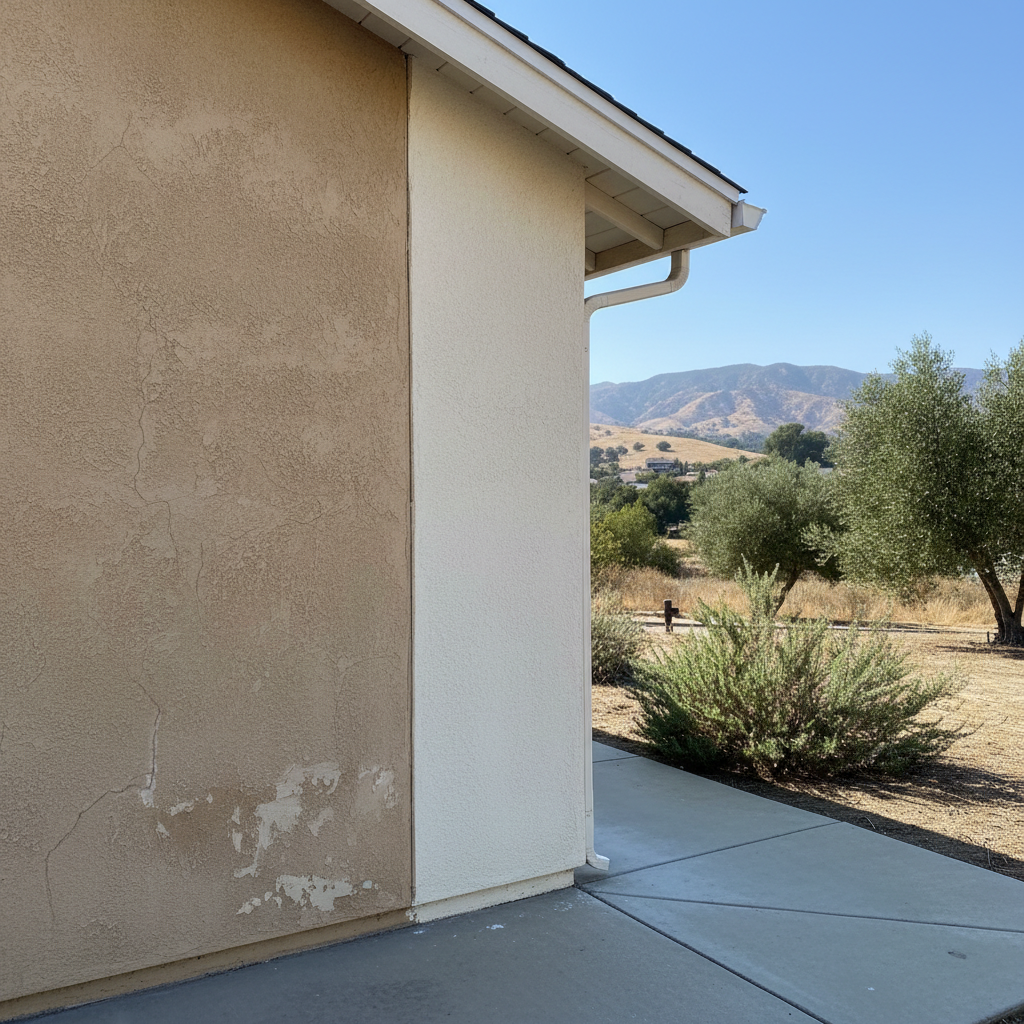
Alright, let's talk stucco. If you're thinking about putting new stucco on your house, or maybe just repairing what you've already got, you're probably wondering about the differences between traditional cement stucco and what folks often call synthetic stucco, or EIFS. It's a common question I get from homeowners all over Claremont, especially with so many older homes around the Village and newer builds up by the Loop. It's a good question to ask!
Traditional Stucco: The Classic Choice
When I say traditional stucco, I'm really talking about good old cement stucco. This is the stuff you see on a ton of houses built here for decades. It's a mix of cement, sand, lime, and water, and we apply it in layers over a lath. It's tough, it breathes, and it has a real solid, classic look to it.
Cost
Generally, traditional stucco tends to be a bit less expensive upfront than synthetic options. The materials themselves are simpler, and while it definitely takes skilled labor to apply it right, the material cost is usually lower. You're looking at a good investment that really holds its value.
Durability & Maintenance
This stuff is built to last, plain and simple. I've seen traditional stucco on homes in Claremont that are 50, 60, even 80 years old, and they still look great with proper care. It's hard, resistant to impact, and it doesn't dent easily. Maintenance usually means cleaning it every few years and keeping an eye out for any cracks. If you get hairline cracks, they're often easy enough to patch and blend in. The biggest thing with traditional stucco is making sure water doesn't get behind it, especially in areas where you might have sprinklers hitting the wall directly or poor drainage. That's true for any exterior, really, but with traditional stucco, it's all about proper flashing and weep screeds.
Appearance
Traditional stucco gives you that classic, slightly textured, matte finish. You can get it smooth, medium, or coarse. We can tint it in a huge range of colors, and it holds paint really well if you decide to change things up down the line. It's got a timeless appeal that fits right in with the architecture we have here in Claremont, doesn't it?
Synthetic Stucco (EIFS): The Modern Alternative
Now, synthetic stucco, or Exterior Insulation and Finish Systems (EIFS), is a different animal entirely. It's a multi-layered system that usually starts with a foam insulation board, then a base coat with a fiberglass mesh, and finally a finish coat that looks a lot like traditional stucco. It's been around for a while, and it's certainly improved a lot over the years.
Cost
EIFS is generally more expensive to install than traditional stucco. You're paying for more layers, specialized materials, and often more specialized labor. However, where it can save you money is on your energy bills, because that foam insulation layer is a fantastic insulator. If you're really looking to boost your home's energy efficiency, this is a big plus.
Durability & Maintenance
Modern EIFS systems are pretty durable. They're flexible, so they're less likely to crack from minor settling or temperature changes than traditional stucco. That flexibility also means they're more impact resistant in some ways – they can absorb a hit without cracking, though a very hard impact can still dent the foam. Maintenance is similar to traditional: cleaning, and making sure you don't have any water getting in. The key with EIFS is proper installation and sealing around windows and doors. If water gets in and can't get out, you can have bigger problems than with traditional stucco, because that foam can really hold moisture.
Appearance
EIFS can mimic the look of traditional stucco very closely, but it often has a slightly smoother, more uniform finish. You can get it in virtually any color, and because the color is part of the finish coat, it's very fade-resistant. It can also be shaped into more intricate architectural details because of the foam underneath, which is something you don't see as much with traditional stucco.
My Take: What's Best for Claremont Homes?
For most homeowners in Claremont, especially with our dry climate and occasional Santa Ana winds, traditional cement stucco is usually my top recommendation. It's proven, durable, and cost-effective. It handles our weather well, and when a crew that knows what they're doing – like us at Classic Stucco & Plastering – installs it correctly, it'll last for generations.
That's not to say EIFS is bad, not at all. It's a fantastic product, especially if energy efficiency is your absolute top priority and you're willing to pay a bit more upfront. If you've got an older home, though, matching the existing aesthetic and maintaining that classic look is often easier and more authentic with traditional stucco. Plus, repairs on traditional stucco tend to be a bit more straightforward for local contractors who've been working with it for decades.
Ultimately, it comes down to your budget, your priorities, and the specific needs of your home. But if you're looking for a solid, reliable, and beautiful exterior that's stood the test of time here in Southern California, you really can't go wrong with traditional stucco.