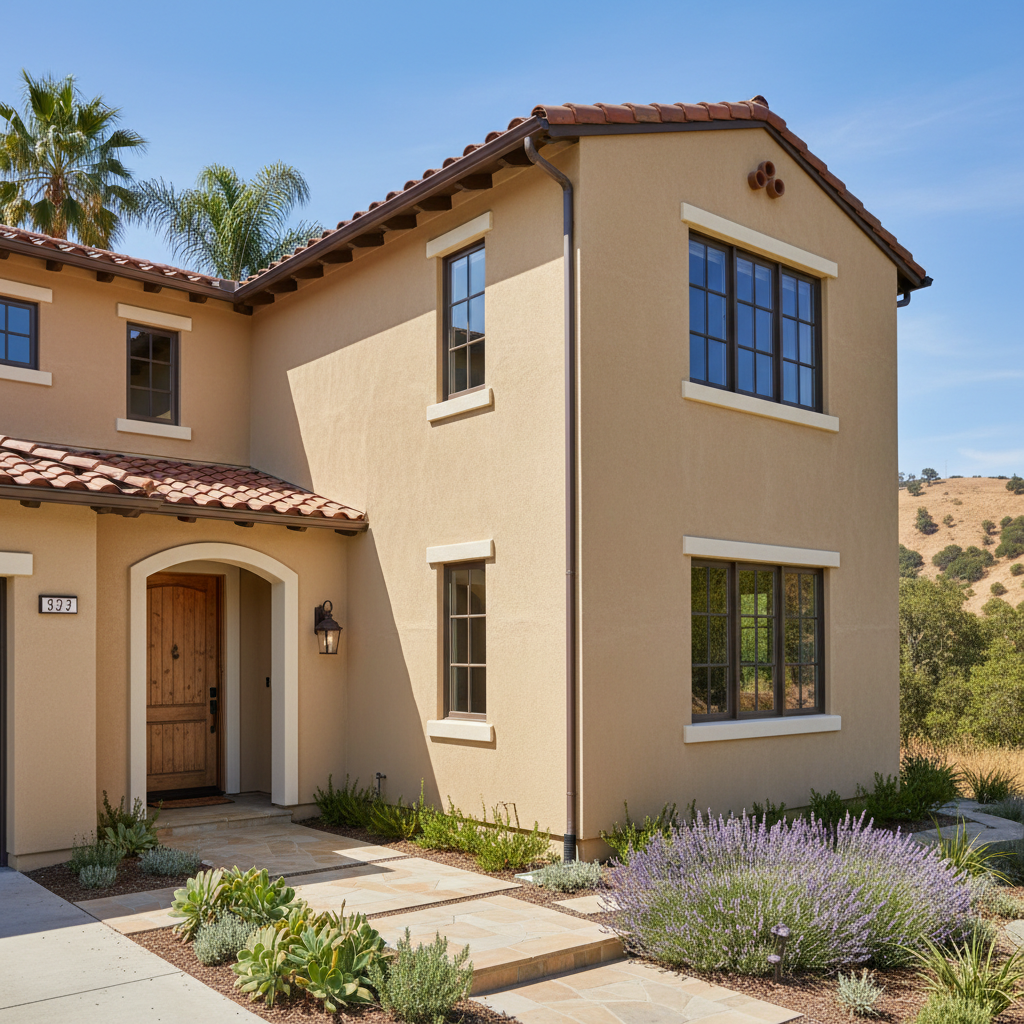
Alright, let's talk about EIFS – that's Exterior Insulation and Finish Systems. You're probably looking into it for the insulation, maybe the design flexibility, or just because you like how it looks. But what's it *really* going to cost you here in Claremont? That's the big question everyone asks, and I'm here to give you some straight answers, not just a vague "it depends."
What Makes EIFS Prices Go Up or Down?
A few big things push the price of EIFS one way or another. It's not just the square footage, though that's obviously a major factor. Here's what I look at when I'm putting together a quote for a job:
- System Type: There isn't just one EIFS system, you know. Drainage EIFS, for instance, is tougher and includes a drainage plane right behind the insulation board. It's designed to handle any incidental moisture that sneaks in, which is a smart choice for our climate, especially with those occasional heavy winter rains we get around the foothills. Barrier EIFS is simpler, but honestly, I rarely recommend it anymore for new residential installs because it relies *only* on the outer layers to keep water out. Drainage systems are generally going to be a bit more expensive, maybe an extra $0.50 to $1.50 per square foot, but they're absolutely worth it.
- Insulation Thickness: EIFS is all about insulation, right? The thicker the foam board (EPS), the better the R-value, but naturally, the higher the material cost. Standard thickness is usually 1 or 2 inches, but you can go thicker if you want. Going from 1 inch to 2 inches might add another $0.25 to $0.75 per square foot.
- Finish Type & Texture: This is where you really get to make it your own. Smooth finishes are generally the least expensive. Medium or coarse aggregate textures can add a bit, and then specialty finishes – like those that mimic stone or brick – will obviously cost more because of the materials and the skilled labor involved. A fine sand finish might be on the lower end, while a heavier, more intricate texture could add $1.00 to $3.00 per square foot.
- Architectural Details: Pop-outs, cornices, bands, quoins, arches around windows – these custom details look fantastic, but they require more labor and specialized foam cutting. The more intricate shapes you want, the higher the cost per linear foot for those details. A simple band might be $10-$15 per linear foot, while a complex cornice could easily run $30-$50 or more.
- Scaffolding & Access: How easy is it to get to the walls, really? A single-story house with clear access is pretty straightforward. A multi-story building, especially one with tight property lines or landscaping that needs protecting, will need more extensive scaffolding and safety measures. That adds to the labor and equipment costs, often anywhere from $1.00 to $3.00 per square foot depending on how tricky it is.
- Substrate Condition: What exactly are we putting the EIFS over? If it's new construction and a clean sheathing, great. If it's an older building with existing siding that needs to be removed, or if there's significant prep work like repairing damaged sheathing, that's extra time and material.
Typical EIFS Cost Ranges in Claremont
Okay, let's get down to some actual numbers. For a standard residential EIFS installation on a typical Claremont home, you're generally looking at:
- Basic EIFS (Drainage system, 1-inch insulation, standard finish): Expect to pay around $10.00 to $14.00 per square foot. This is for a fairly straightforward job with good access.
- Mid-Range EIFS (Drainage system, 2-inch insulation, medium texture, some architectural details): This will likely run you $14.00 to $18.00 per square foot. It's a common choice for homeowners wanting good insulation and a bit more visual appeal.
- High-End/Complex EIFS (Thicker insulation, custom finishes, extensive architectural details, difficult access): For these projects, you could be looking at $18.00 to $25.00+ per square foot. Think very custom designs, intricate trim work, or large commercial projects with significant height.
These ranges include materials, labor, and standard project overhead. Remember, these are averages. Your specific project could definitely be higher or lower.
What's Included in a Quote from Classic Stucco & Plastering?
When you get a quote from us, or any reputable contractor for that matter, it should be pretty detailed. Here's what you should expect to see:
- Material Breakdown: Specifics on the EIFS system (drainage or barrier), insulation thickness, type of mesh, base coat, primer, and finish coat.
- Scope of Work: A clear description of what's being done – surface preparation, installation of the EIFS components, application of the finish, and any specific architectural details.
- Labor Costs: The cost of the crew to install everything.
- Equipment & Scaffolding: Any necessary equipment, lifts, or scaffolding.
- Waste Removal: How they'll handle debris and clean-up.
- Warranty Information: Details on the product and labor warranties.
- Permits: Who is responsible for pulling the necessary building permits.
Make sure any quote you get specifies the *exact* EIFS manufacturer and system. There are good ones out there like Dryvit, Sto, Senergy, and Finestone. You want to know what you're getting, right?
How to Avoid Overpaying for EIFS
Nobody wants to get ripped off, right? Here's how you can protect your wallet:
- Get Multiple Bids: This sounds obvious, but it's crucial. Get at least three detailed quotes. Don't just go with the cheapest; compare what's included in each. A really low bid might mean they're cutting corners on materials or labor, which is a problem down the road.
- Check References & Licenses: Always, always check a contractor's CSLB license. Call their references. Look at their past work. You wouldn't buy a car without test driving it, so don't hire a contractor without checking their track record.
- Understand the Contract: Read every single line. If you don't understand something, ask. Don't sign anything until you're completely clear on the scope, timeline, payment schedule, and warranty.
- Beware of Cash-Only Deals: This is a huge red flag. Reputable contractors operate legitimately.
- Ask About Warranties: EIFS manufacturers offer product warranties, and a good contractor will stand behind their labor. Make sure you know what's covered and for how long.
- Don't Pay in Full Upfront: A reasonable down payment (usually 10% or a set amount by law) is normal, but never pay the full amount before the work starts or is completed to your satisfaction. A typical payment schedule might be 10% down, progress payments at certain milestones, and the final payment upon completion and your approval.
EIFS is a significant investment in your property, but when done right, it offers great benefits in terms of energy efficiency and curb appeal. Do your homework, ask the right questions, and you'll get a great result without breaking the bank.