Stucco Maintenance: Your Claremont Home Deserves It
So, you've got stucco on your place, and you want it to last? Smart thinking. A good stucco job, the kind folks like us at Classic Stucco & Plastering do, really should give you decades of trouble-free service. But here's the thing: "trouble-free" doesn't actually mean "maintenance-free." It just means you won't be calling us every other year for huge fixes if you keep up with a little routine care. Think about it like changing the oil in your car; a small effort now saves you a big headache and a lot of cash down the road.
Our Claremont climate, thankfully, is pretty forgiving for stucco. It's not like living in a place with harsh winters and those awful freeze-thaw cycles. Still, we get plenty of sun, some heavy downpours now and then, and those Santa Ana winds can really kick up dust and debris. All that stuff can definitely take a toll if you're not paying attention.
Extending the Life of Your Stucco: Simple Steps
Want your stucco to stick around for ages? The biggest thing you can do is keep it clean and dry. Honestly, for most of it, it's that straightforward.
- Keep it Clean: Dirt, dust, and even mildew can build up, especially on north-facing walls that don't get much sun. Usually, a gentle wash with a garden hose and a soft brush is all you'll need. For tougher spots, a mild detergent (like dish soap) and water works wonders. Just make sure to rinse everything really well. Oh, and don't use a high-pressure washer unless you absolutely know what you're doing; you could damage the finish or even force water behind the stucco, which is exactly what we're trying to avoid.
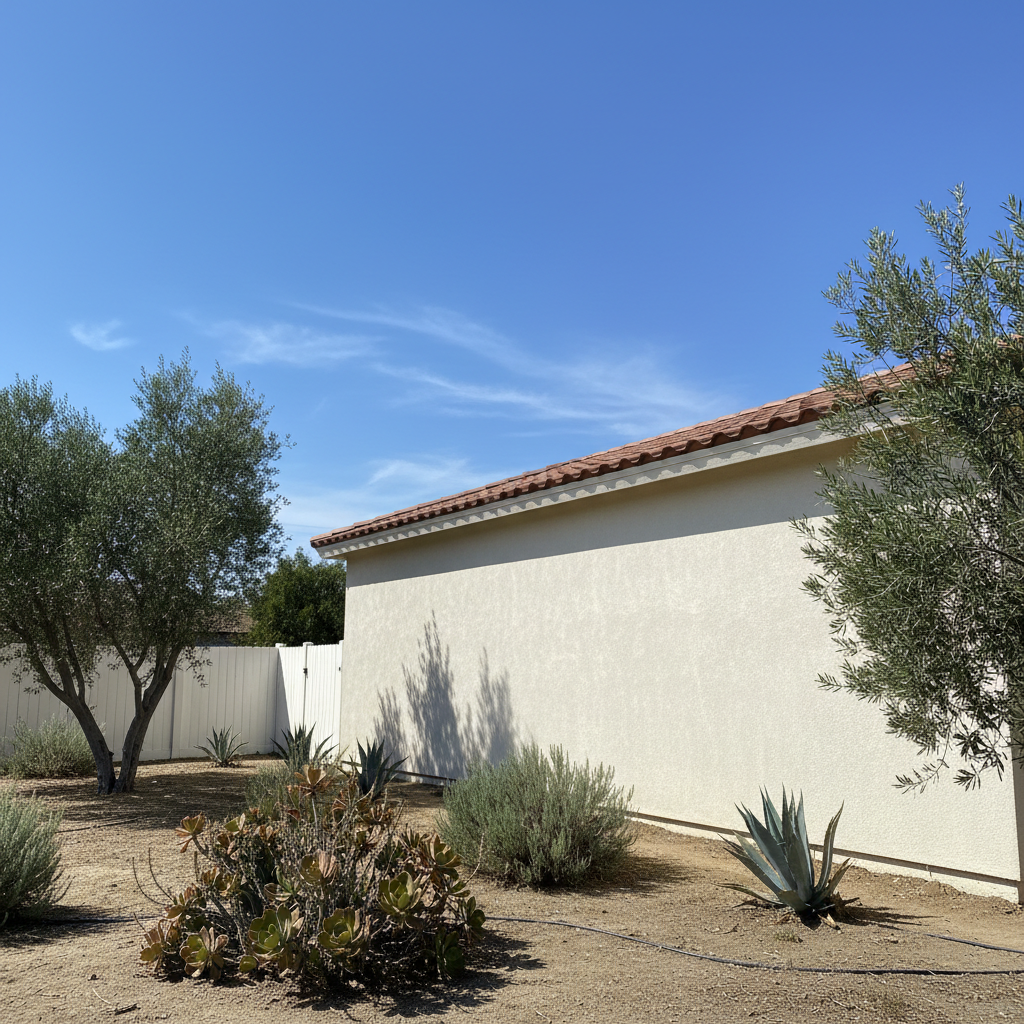
- Manage Water: This is huge. Stucco is built to shed water, but it's not waterproof. Anywhere water can sit or get trapped becomes a potential problem. So, make sure your gutters are clean and draining properly, pushing water away from your foundation. Check your sprinkler heads – are they constantly spraying a wall? Adjust them! Take a look at your landscaping; bushes and trees too close to the house can trap moisture against the stucco, and their roots can even cause foundation movement that eventually cracks the walls. Trim them back, please.
- Sealants and Caulking: Pay close attention to where stucco meets other materials – around windows, doors, trim, and any utility lines coming into the house. The caulk there is your first line of defense against water getting in. Over time, caulk dries out, cracks, and pulls away. Inspect these areas every year, especially after our hotter summer months, and re-caulk with a good quality exterior sealant if you spot any gaps.
Warning Signs: What to Look For
Your stucco will usually tell you when something's wrong, if you just know how to listen. Here are the red flags I always tell my clients to watch out for:
- Cracks: Small hairline cracks are often just superficial; they're part of the stucco's natural curing and how it expands and contracts. But wider cracks (say, bigger than a credit card), cracks that look like a spiderweb, or cracks that run horizontally or diagonally from window and door corners? Those are more serious. They could mean structural movement or, even worse, they're letting water in.
- Stains and Discoloration: Dark streaks, especially below windows, vents, or rooflines, often point to water getting behind the stucco or consistently running down a specific spot. Green or black patches? That's probably mildew or algae, which usually means there's persistent moisture.
- Bulges or Soft Spots: If you see a section of stucco bulging outwards, or if you tap on it and it sounds hollow or feels soft, that's a major warning sign. It usually means water has gotten behind the stucco, and the lath or sheathing underneath is rotting or delaminating. This needs immediate attention, no kidding.
- Peeling Paint or Finish: If your stucco is painted and the paint is bubbling, peeling, or flaking off, it can be a sign of moisture trapped underneath, trying to escape.
- Efflorescence: This is that white, powdery stuff that sometimes shows up on stucco. It's mineral salts left behind when water evaporates from inside the wall. It means water is getting in and then drying out, leaving those salts behind. While it's not always damaging itself, it's a clear indicator of a moisture problem.
When to Call a Professional
Look, I'm all for homeowners doing what they can. But there are times when you really need to bring in someone who knows stucco inside and out. If you spot any of those major warning signs – wide cracks, bulges, soft spots, or persistent staining you can't figure out – don't wait. The longer you put it off, the worse and more expensive the repair usually gets. What might be a small patch job today could turn into a full re-dash or even structural repair if water damage spreads.
Also, if you're not comfortable on a ladder, or if the problem area is way up high, call us. Safety first, right? We've got the proper equipment and experience to get up there safely and assess the situation accurately. We'll give you an honest appraisal of what's going on and what it'll take to fix it right, making sure your Claremont home stays beautiful and protected for years to come.
A Final Thought on Claremont's Unique Challenges
Here in Claremont, especially in some of the older neighborhoods with big, mature trees, root systems can sometimes cause subtle shifts in foundations over decades. That's another reason why those diagonal cracks around window corners can pop up. It's not always just a stucco issue; sometimes it's a symptom of something deeper. A good stucco pro will be able to tell the difference or at least point you in the right direction if it's actually a foundation problem.